How do online slots work? The tech behind RNG, RTP, and bonus features
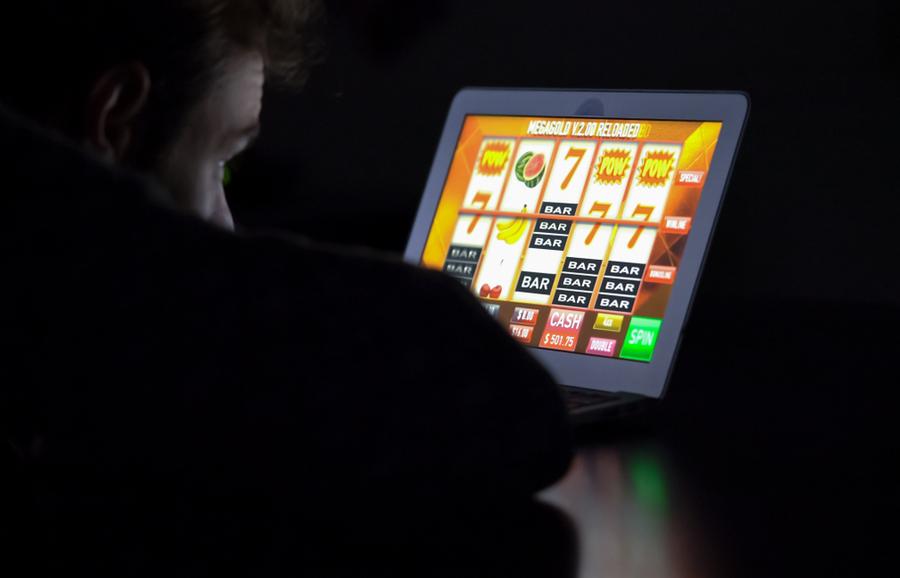
Online slots are the most played category of casino games worldwide, yet most players interact with them the same way they interact with a black box: they press spin and wait. Behind that interface lies a set of engineering decisions any web game developer would recognize: randomness algorithms, probability distributions, conditional logic, and state machines. Each layer, from the PRNG at the core to the external audits that certify the output, is worth understanding on its own terms.
| Concept | What it means | Why it matters |
|---|---|---|
| PRNG | Algorithm that generates unpredictable number sequences from a seed | Determines the outcome of every spin |
| RTP | Percentage of total bets returned to players over time | Defines the game's mathematical edge |
| Volatility | Frequency and size of payouts | Shapes the player experience session to session |
| Bonus features | Triggered game states with conditional logic | Adds engagement layers on top of base gameplay |
| Third-party audit | Independent verification of RNG and RTP accuracy | Ensures the game behaves as declared |
The engine behind every spin: how the PRNG works
Every online slot runs on a Pseudo-Random Number Generator (PRNG), a software algorithm that produces a continuous stream of numbers from an initial value called a seed. That seed is typically derived from system variables like server timestamps or hardware inputs, making it practically impossible to predict from the outside.
The most widely used algorithm in gaming contexts is the Mersenne Twister, which produces sequences with an astronomically long period before repeating. The PRNG runs constantly, not just when a player hits spin. By the time a spin is initiated, the generator has already cycled through millions of values. The result of the spin is whichever number the algorithm lands on at that exact millisecond, making human timing irrelevant to the outcome.
PRNG vs. TRNG: what the difference means in practice
The distinction between pseudo-random and truly random generation is more than academic. A True Random Number Generator (TRNG) pulls entropy from physical phenomena: thermal noise, radioactive decay, and atmospheric interference. A PRNG, by contrast, is fully deterministic: given the same seed, it will always produce the same sequence.
As MIT professor Steve Ward explains, pseudo-random numbers are sufficient for most applications, but the moment someone knows both the seed and the algorithm, the sequence becomes predictable. This is why seed management and algorithm complexity are treated as security concerns in certified gaming software, not just mathematical ones.
For online slots specifically, the consensus across the industry is that a well-implemented PRNG, regularly audited, provides sufficient randomness for fair gameplay. The mathematical unpredictability of a modern 64-bit PRNG over any realistic session length makes reverse engineering functionally impossible.
RTP and volatility: the math that shapes the game
The Return to Player (RTP) is the percentage of all wagered money that a slot is designed to pay back over an infinite number of spins. A game with a 96% RTP will, in theory, return $96 for every $100 wagered across its entire lifetime. That figure is not a session guarantee; it is a long-run statistical property, and it only converges to its declared value over tens of millions of spins.
RTP is baked into the game's paytable and symbol weighting. Developers assign a frequency to each symbol on each virtual reel, frequencies that players never see directly but that define the probability of every combination. Adjusting those weights shifts the RTP without changing anything visible in the interface. Regulators in most licensed jurisdictions require slots to declare their RTP and prohibit any dynamic adjustment after certification.
Understanding volatility
Where RTP describes the long-run return, volatility (also called variance) describes the distribution of that return across individual sessions. A low-volatility slot hits frequently but pays small amounts. A high-volatility slot can go hundreds of spins without a significant payout, then return a large multiple of the stake in a single win.
Both models can carry identical RTPs. The difference is entirely in the shape of the distribution. From a game design perspective, volatility is a deliberate product decision: it determines the emotional rhythm of a session, how long a player's bankroll lasts at a given bet size, and which player profiles the game targets. Platforms curating new slots for players in specific markets — French-speaking platforms are a good example — typically surface volatility ratings alongside RTP figures, giving players a clearer picture of what to expect before committing to a title.
Bonus features: conditional logic as game design
Bonus features are not cosmetic additions. They are discrete game states with their own rules, symbol sets, multipliers, and win conditions, triggered by specific combinations in the base game. From a development standpoint, a free spins round is a separate game loop that gets entered when a trigger condition is met, runs a defined number of iterations, then returns control to the base game.
Common bonus mechanics found in modern slots include:
- Free spins: a set number of spins awarded at no cost, often with enhanced multipliers or expanded wild symbols
- Cascading reels (also called avalanche or tumbling): winning symbols are removed and replaced by new ones falling from above, allowing chain wins from a single spin
- Megaways: a licensed mechanic by Big Time Gaming that randomizes the number of symbols per reel each spin, producing up to 117,649 ways to win
- Pick-and-click games: a selection interface presenting hidden values, resolved by a predetermined outcome generated by the PRNG at the moment the bonus is triggered
- Progressive jackpots: a shared prize pool that increments with each bet across all instances of the game, triggered by a condition that may be fully random or tied to specific symbol combinations
A key point for developers: in pick-and-click mechanics, the outcome is already determined before the player makes any selection. The choice of box or symbol is purely presentational. The PRNG resolves the result at trigger time, and the interface simply reveals it in a way that feels interactive. This is a common pattern in game design: separating the moment of resolution from the moment of revelation to maximize engagement.
Third-party audits: how fairness gets verified
A declared RTP and a certified PRNG algorithm mean nothing without independent verification. Licensed slots are required to undergo regular audits by accredited testing laboratories before release and, in many jurisdictions, on an ongoing basis throughout the game's commercial life.
The major certification bodies in the industry are:
- eCOGRA (London): the most widely recognized seal in online gambling, covering RNG testing, RTP accuracy, and platform fairness
- iTech Labs: an independent agency whose mandate is specifically to protect player interests, not operators
- Gaming Laboratories International (GLI): covers technical certification across hardware and software, recognized in hundreds of jurisdictions
- BMM Testlabs: one of the oldest testing agencies, operating since 1981, with approvals across 400+ regulatory bodies
The audit process involves statistical analysis of millions of simulated outcomes to verify that the distribution of results matches the declared paytable, that the RTP converges to its stated value, and that no exploitable patterns exist in the PRNG output. A slot that fails these tests does not receive certification and cannot be deployed on a licensed platform.
For developers, understanding this pipeline is a useful context: the same principles that govern certified randomness in casino games–seed management, algorithm transparency, statistical distribution testing–apply to any competitive game where outcome integrity matters.
🔙 Back to Articles list.