Why Modern Gamers Rely On Low Latency
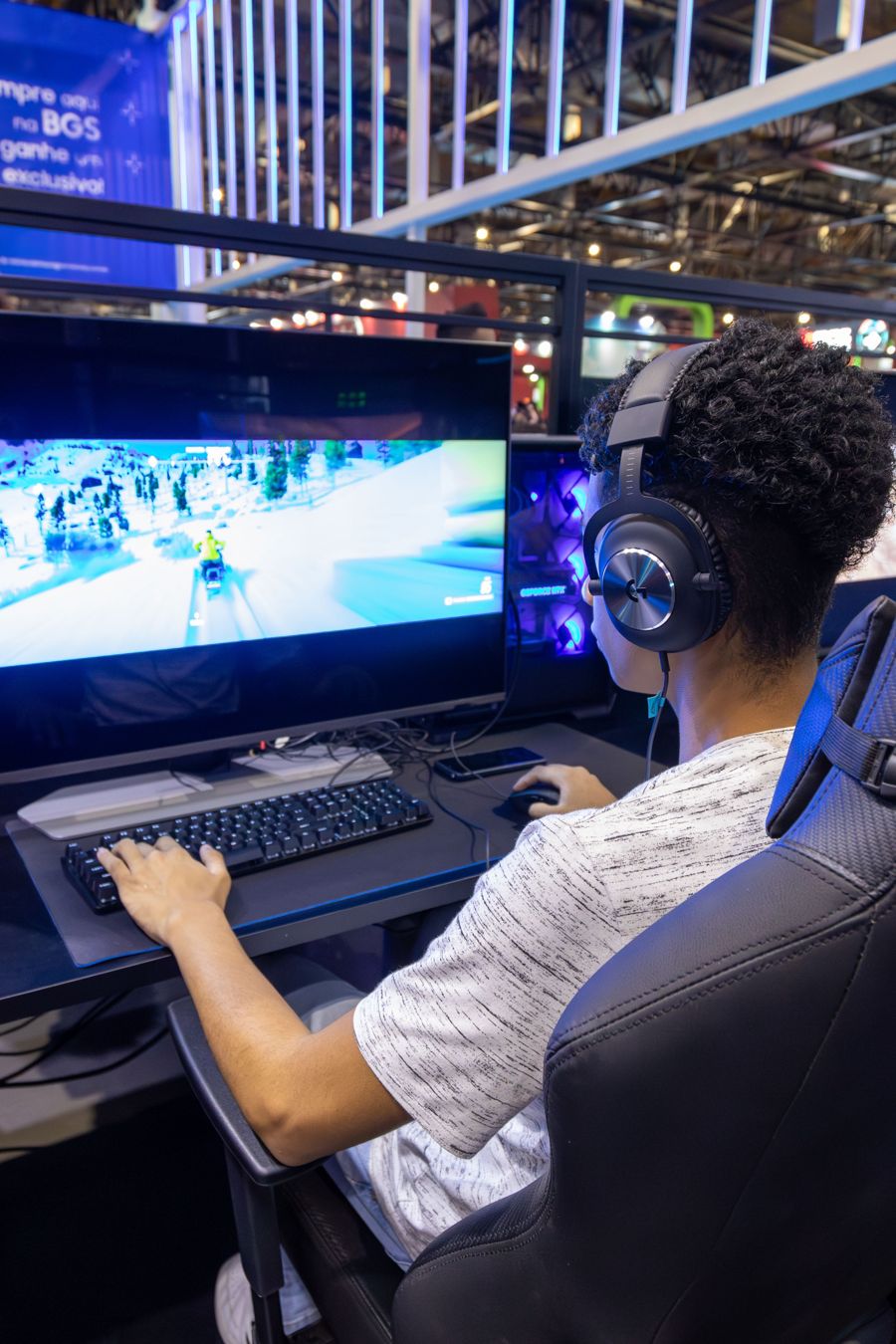
Gamers rely on low latency because network delays can have a direct impact on competitiveness, execution and immersion. For modern gamers, low latency ensures faster response times, reduced input lag and accurate hit-registration. In fast-paced multiplayer games, a delay of even a few milliseconds can cause a player to lose a match.
Visual quality and captivating storytelling were once the benchmark for evaluating a game’s quality, but in the modern age, competitive structures, cloud infrastructure and esports are dominating the industry. This means that performance isn’t just measured by raw frame rates or graphical resolutions anymore; it’s measured in milliseconds.
In the world of modern gaming, milliseconds have come to mean the difference between victory and defeat, and as multiplayer games become faster and more mechanically demanding, minimizing the friction between the system and the network is vital. This is why attaining low latency has become the foundation of the entire global gaming sector.
The Latency Spectrum Explained
Before you can understand why modern gamers are so obsessed with speed, it’s helpful to break latency down into its two primary forms:
- Network latency (Ping) measures the time it takes for data to travel from your device, across the internet to the game server and back again.
- System latency (Input lag) pertains to the delay within your local setup. It tracks the moment that a mechanical switch clicks on your mouse to the exact instant that a pixel changes color on your monitor.
As soon as either of these metrics spikes, the illusion of fluid, simultaneous control is completely shattered. Since modern games process game states at blistering speeds, a high-latency connection can fundamentally detach your physical intent from the virtual reality on the screen.
The Competitive Necessity of Hit Registration
When it comes to tactical first-person shooter games like Valorant, Counter-Strike 2 or Apex Legends, the importance of mechanical precision cannot be overstated because weapon balance is dependent on sub-second time-to-kill (TTK) windows. In these arenas, latency dictates the accuracy of hit registration.
When you fire a weapon, your local client sends a packet of data to the central server confirming the shot. Should you suffer from high latency, this data will arrive late. By the time the packet reaches the server, your target would have already moved behind cover or fired a fatal counter-shot.
This delay is what leads to ghost shots, which is what happens when visual impacts show blood or sparks on your screen but register as zero damage on the server. Low latency is responsible for ensuring that your spatial awareness, reflex speed and crosshair placement get the rewards they deserve instead of being swallowed by network desynchronization.
Eradicating the Artifacts of Desynchronization
High latency can introduce severe positional anomalies that ruin your competitive integrity and the immersion of the game. The most notorious of these are known as peeker’s advantage and rubber-banding.
Peeker’s Advantage
Since data takes time to travel across the network, a player moving around a corner will appear on their own screen before the server can broadcast their movement to a stationary opponent. If the player moving has an optimized connection, they gain the advantage of having a fraction of time where they can see and shoot the stationary opponent before they even render on the opponent’s screen. Minimizing latency is the only way for defensive players to rectify this disparity.
Rubber-Banding
When a connection experiences severe jitter or packet loss, the server and local client disagree on a player’s physical coordinates. In this case, the server overrides the local client, instantly snapping your avatar backward in time to your last verified location.
This disorienting stutter makes movement almost impossible to predict and basically eliminates any chance for tactical execution.
Latency isn’t just about becoming frustrated with delays because it can severely impact the success of your video gaming when your opponents have a competitive edge over you simply because their data loads faster than yours.
High-Rolling Peripherals and Display Tech
The endless quest for zero friction has led to immense development across the gaming hardware industry. Monitors, mice and keyboards have evolved exponentially beyond the standard consumer specifications as a way to eliminate the challenges caused by internal systems.
Now modern gamers are enjoying features like:
- Ultra-high refresh rates
- Extreme polling rates
- Driver-level optimizations
These features have created an experience where visual data reaches your eyes without artificial delays, facilitating unprecedented tracking smoothness and ensuring that the frame rendered on your screen aligns perfectly with your immediate physical input, making the gaming experience more seamless than ever before.
Latency is Paramount For Gaming Success
Having a game or video buffer at the worst time isn’t just frustrating; it’s also a massive tactical disadvantage. Even with all the gaming skills, strategies and prowess, high latency can still lead to defeat if you’re up against someone who has optimized their network connection.
🔙 Back to Articles list.