Social Casino Gaming Is in Full Swing. Why Does It Matter, and How Will It Continue to Expand?
Every time there’s a series of legislative breakthroughs in a field of entertainment with as much of complex a past as gambling has, there’s the risk of market saturation. When signs of this phenomenon start popping up, it’s very likely that those in charge of it will respond in such a way that opens up new avenues while capturing a similar audience.
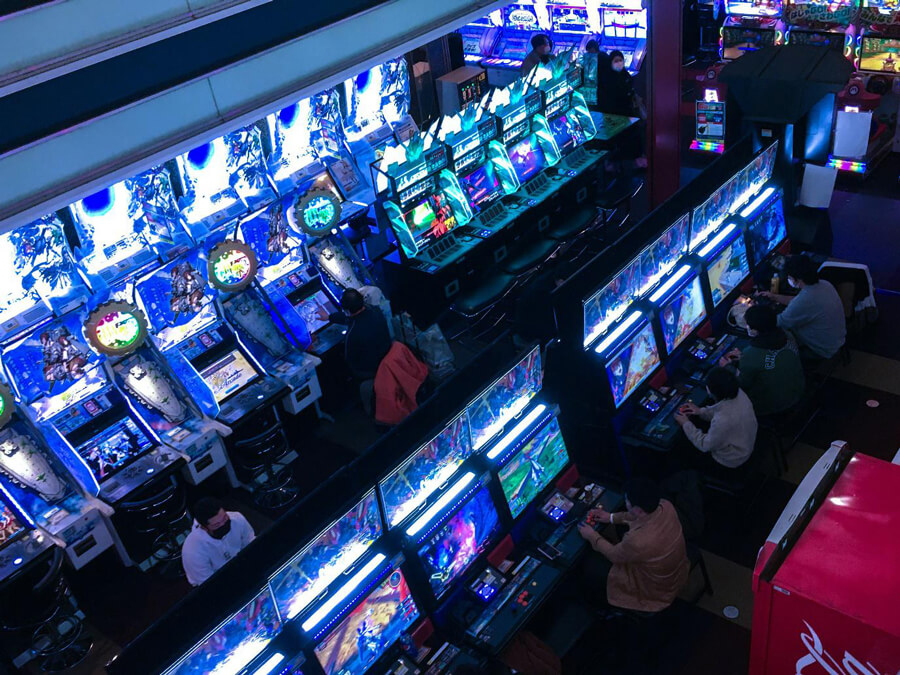
We can look at social casino gaming as this particular instance. While the gameplay mechanics and principles are almost the same as in traditional gambling, there are some fundamental points of divergence that give it a surprisingly different profile. As such, it comes with a degree of novelty without feeling foreign.
This level of familiarity is one of its greatest strengths. However, it implies much more than just a retooled model of gaming. Social gaming has developed into a submarket with a distinct identity that creates enough upside for it to continue to be viable.
While the current model has enough success (which we will detail further on), one of the most prevalent questions about the medium is whether it has the potential to expand. We are here to explain the context behind this question and see if we can determine where social gaming can go if it is to become more viable.
Explaining social casino gaming
Social casino gaming is a phenomenon that has entered the iGaming market, and implies the idea of playing casino-style games of luck without the actual mechanics of paying money for the gameplay. Also called sweepstakes casino gaming, it’s a method of bringing the structure and mechanics of casino games without the implied cost of each spin.
Its name of ‘social’ gaming stems from the fact that its primary purpose and appeal is to game within a sense of community and competition. The main attraction is, how Bernd Eibl of Greentube put it, ‘the appeal of competition, team-based activities, and community interaction – such as leaderboard rankings, team challenges, and interactive events.’
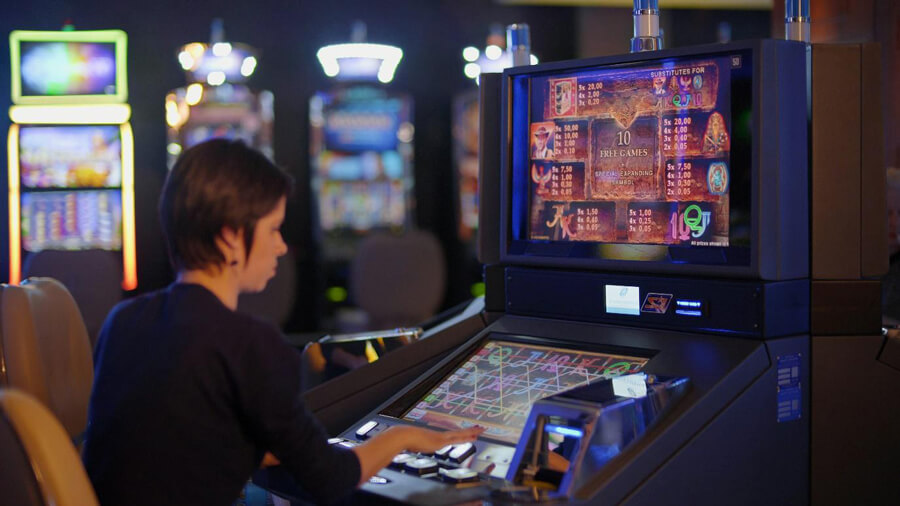
The creativity of social gaming comes from various mechanisms. For example, social tournaments provide the opportunity to compete on various criteria within a competitive environment for the ultimate winner’s prize. The achievement-based element is where gameplay generates the need to complete a quest for the sake of the gratification that it provides.
The model brings the idea of playing games of luck, letting chance dictate outcomes, and measuring up to the community within that social casino sphere. It’s a methodology that implies the usage of traditional means in a completely different context, emphasizing mass engagement and mitigating (if not eliminating) most of the risk factors.
Fundamental differences in approach
The first (and most fundamental) difference between traditional and social gaming is the lack of cost. Yes, there can be in-platform payments for certain benefits during social gaming, but they are not the type that will provide you with the right to play more. It may provide access to certain parts of a gaming collection, exclusive quests, or come up with visual/personalization elements.
However, you won’t have to continuously fork out money for each spin that you make. The games that you play may be the same slots, but the number of spins or credits that you have depends on something other than your budget. You’ll probably receive credits that you can use sequentially, especially if they are to run out at some time.
Another highly important part is the idea of revenue. This medium had a market value of circa $19.5 billion in 2024, per a report on the social casino gaming market. As such, it’s clear that there is money to make. The revenue mainly comes from aspects like exposure deals (such as sponsorship partnerships and agreements) and ad revenue.
The costless nature of social gaming aims to bring volumes of players that may have had reservations about playing for real cash. As such, revenue piles as the traffic increases, and the overall market benefits from numerous entries.
Why do players find this model of gaming compelling?
They do. The same report we’ve cited previously has actually released its estimations for 2025, and the figure should be in the area of $24 billion, based on current trends and money movement. In fact, the CAGR forecast between 2025 and 2034 is thought to be 23.06%, with the total market of social casino gaming considered to have the potential to surpass $155 million by 2034.
This is just in terms of numbers. Another major industry figure, Dmitry Starostenkov, CEO of EvenBet Gaming, clarifies that ‘by providing a risk-free environment where players can enjoy casino-style games without financial stakes, social casinos help to familiarize users with game mechanics and build their confidence.’
What this tells us is that the social gaming situation is a type of option that serves a valuable entry-level experience. The lack of pressing stakes gives it a particularly valuable position.
However, the value of this phenomenon also comes from its position as an entry-level element. Given that social casino gaming provides a level of familiarity and focus on the mechanics and dynamics of playing these games, they have the potential to serve as a gateway into the world of real money gaming, which has a clear long-term intentionality for those who provide social gaming services.
Where to next?
What can this market do to continue to grow? Its model is surely simplistic enough to warrant maintenance, but there must be something of a scalability potential if it is to meet its expectations of growth.
In this section, we will address the technological possibilities that this type of gaming can integrate.
Better social methods
This is a bit of a spectrum rather than just a simple solution that requires direct development. Social adherence provides a special level of upside because it works on a fundamental level. Since social gaming implies social dynamics, host platforms can get back to the drawing board and implement solutions that have real depth.

The implementation of multiple chats is the first idea. Many gaming platforms have global chats. However, there would be real merit in creating chats for tournaments or teams that compete in social gaming events. The hard part about them is the moderation of chat content, which would require resources, such as a well-programmed AI-powered mod.
Moreover, we can think of solutions as status checks or taunts. We know about taunt schematics from video games, and this would be an interesting and fun way of providing a level of competitive stimulation beyond standard chat elements.
Finally, for this subsection, we’d like to shoehorn the idea of VR/AR usage. Being able to get into a lobby and see other players queuing or playing on virtual slots next to you gives a certain level of immersion that generates an even stronger interest in both the gameplay aspect and the direct social atmosphere.
More interesting reward systems
If you have any degree with familiarity with this kind of medium, you probably know that the rewards that social casino gaming brings are one of the main appeals. We don’t refer to the contents themselves, but the structure. They provide rewards for aspects like the quests and tournaments that we’ve mentioned before.
This is quite a simple element to address because the ball is in the court of those who host social gaming. However, some of the most popular solutions that have entered the iGaming market are personalized rewards.
If you provide them for individual players, you can employ AI pattern recognition to customize rewards for those users. However, you can go even further. When creating team-based events, you can match up players with similar styles and preferences. The rewards can end up being a good option for players of all kinds of styles!
Conclusion: Is the best yet to come?
We can say that this sector of the industry is on the up. The rise depends on the idea of legislative acceptance and implementation, especially in markets where traditional gambling has yet to become legal in earnest. In the USA, where regulations are open to the model, social gaming is very popular, with 42% of the global social gaming market coming from America.
As such, we see that there is a lot of room for growth on all fronts. The most important thing to note for anyone willing to engage in any type of game of luck is to play responsibly!
🔙 Back to Articles list.