Will Cloud Gaming Replace Consoles Completely?
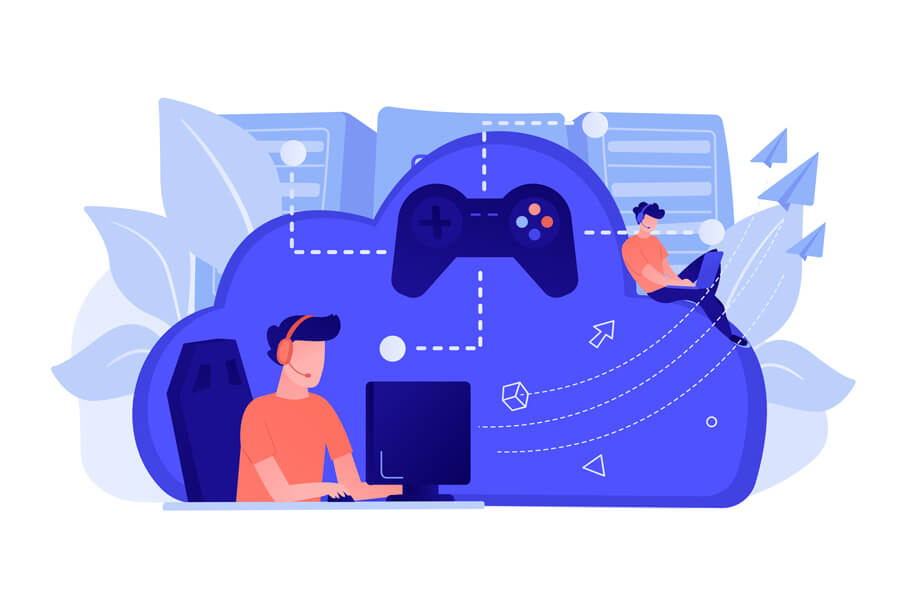
Video gaming has undergone a significant evolution over the last few decades. What was once known for its massive arcade machines evolved into an industry dominated by consoles like Nintendo Switch, PlayStation, and Xbox, which have shaped how we experience games for many years. However, a new chapter has now unfolded. Cloud gaming has arrived, and it’s redefining the way we play once again.
Cloud gaming has made gaming more accessible than ever. It allows players to stream video games and play directly on their devices via the internet, eliminating the need for expensive, bulky hardware. With the popularity and convenience of this innovation, many are questioning whether it will be the death of traditional consoles.
This article dives into the exciting cloud gaming ecosystem, exploring its potential to be a total replacement for traditional hardware.
What is Cloud Gaming?
Traditionally, video games require players to download and install titles on their heavy and expensive consoles and hardware. These games run directly using the devices’ central and graphics processing units (CPU & GPU).
Cloud gaming changes this by enabling players to stream video games in real-time through powerful remote servers, eliminating the need to download or install them locally on their devices. The concept here is quite similar to the massive global streaming service for movies, which is why many refer to it as the “Netflix of Gaming.”
Unlike what many people think, cloud gaming has been around for several years, dating back to the 2000s. In fact, it has been the backbone of the iGaming industry since its inception, allowing people to play exciting casino titles like the Fan Tan Casino game from anywhere without needing to download anything.
How Cloud Gaming Works
Cloud gaming typically relies on high-performance servers in massive data centres. These servers do all the heavy lifting involved in gaming processing. When a player accesses their favourite cloud-based game, the remote servers start running it.
Every operational aspect of the gameplay, ranging from graphics to sound and input actions, is processed directly on these remote servers. A compressed stream is sent to the player’s device in real-time, providing gameplay action just like the conventional alternative. Overall, all you need to enjoy cloud gaming is a device with streaming capability and internet connectivity.
Benefits of Cloud Gaming Over Consoles
Cloud gaming has become the go-to option for many video gamers today, as it offers several benefits over traditional console alternatives. Let’s explore some of these advantages:
Accessibility and Convenience
The biggest benefit of cloud gaming for players today is the increased accessibility and improved convenience it has brought to the scene. The innovation has completely removed the hardware barrier. You no longer need an expensive console or gaming PC as you can easily enjoy games on the cloud with a simple smartphone, tablet, PC, or even TV.
Low Entry-Cost Barrier
Another significant advantage of cloud gaming is its low entry cost barrier. With this option, gamers don’t need to spend hundreds of dollars on expensive gaming consoles or high-performing PCS. You just need a simple, compatible device (such as a smartphone, tablet, or PC), a low subscription fee, and a stable internet connection.
Instant Access
Cloud gaming offers unprecedented flexibility to gamers. With this innovation, gamers today no longer need to go through a download or installation process. You can just pick your device and start playing games almost instantly.
Vast Game Libraries
Cloud gaming offers players access to a vast catalogue of video games. The possibilities here are endless. The best part is that, unlike the traditional alternative, where you can only play certain games on specific consoles, you can easily access and enjoy any game you want with cloud gaming.
Others Benefits
Other pros of cloud gaming include:
- Cross-platform gaming
- Requires no hardware upgrades
- Eco-friendly potential
Why Consoles Still Matter: Challenges of Cloud Gaming
Despite the undeniable advantages it offers, cloud gaming faces several limitations when compared to consoles. Some of these include:
- Internet dependency: Cloud gaming is entirely reliant on a fast and stable internet connection. Gaming experience in regions with poor internet infrastructure can often be affected by buffering and lag, which can be frustrating.
- Input lag delay: Even the slightest input lag (the delay between controller input and action) can significantly affect gameplay in cloud gaming.
- Ownership: Unlike the physical and digital nature of traditional consoles, cloud gamers don’t own their video games. As such, if a service shuts down or a title gets removed for any reason, players lose complete access to it.
- Data usage: Cloud gaming consumes a huge amount of data, a factor that can be problematic for many users. This is especially so for gamers with limited bandwidth or data caps.
Cloud Gaming vs. Traditional Consoles
Below is a comparison between innovative cloud gaming and traditional console alternatives.
| Attribute | Cloud Gaming | Traditional Consoles |
|---|---|---|
| Initial cost | Low (subscription-based) | Often high |
| Accessibility | Play on any device | Dedicated device required |
| Flexibility | Anywhere with stable internet | Limited to console location |
| Latency | Lag risk | No input lag |
| Performance | Depends on internet connectivity and server power | Relies on hardware performance |
Closing Verdict
Cloud gaming is rapidly expanding from a niche aspect of the video gaming world into a popular alternative to consoles. This comes as no surprise, as it has made gaming more accessible, affordable, and convenient.
However, while the innovation has positioned itself as the future of modern gaming, it’s unlikely to replace traditional consoles completely anytime soon. Instead of a replacement, we expect to see the emergence of a hybrid model, where cloud gaming and physical consoles complement each other. In fact, major players like Microsoft and Sony are already actively incorporating cloud streaming into their gaming ecosystems.
🔙 Back to Articles list.