Building Immersive Environments in Online Games
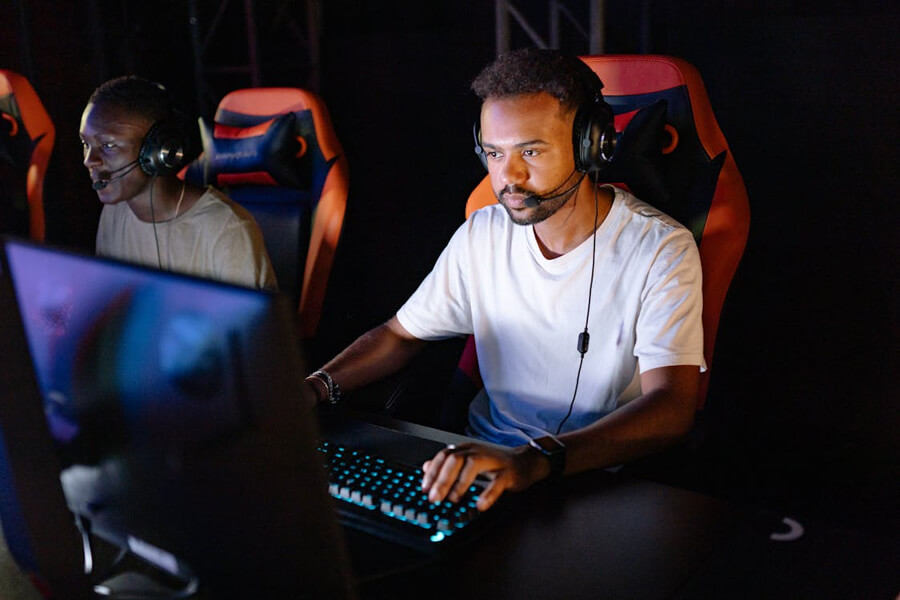
When players talk about getting lost in a game, they do not just mean losing track of their character on screen. The on-screen world feels so real that everything else fades away. The feeling of full attention and emotional involvement makes a game immersive.
Creating this kind of experience does not happen by chance. Developers must carefully consider sight, sound, movement, and more. It takes both creativity and technology to make a game feel natural and smooth.
Online games provide a clear example of how this works. Some even use real-time video to add a human touch. These games show how minor design choices can significantly affect the realism of the experience.
What Makes a Game Immersive
One of the most important factors in creating an immersive game is world-building: believable environments, consistent lore, and attention to small details make the game world feel alive. Whether it’s a richly detailed open world or a tightly designed setting, the more coherent and consistent the world feels, the easier it is for players to lose themselves in it.
Another key element is player agency. When a game reacts meaningfully to a player’s choices—whether through branching narratives, dynamic environments, or responsive mechanics—it strengthens the sense of presence.
Immersion grows when actions feel consequential, rather than scripted or disconnected from the world.
Sensory design also plays a major role. High-quality visuals, atmospheric soundscapes, natural animations, and intuitive controls all work together to minimize distractions and enhance presence.
When these technical aspects blend seamlessly with narrative and gameplay, players can suspend disbelief and become absorbed in the experience.
Techniques Used to Build Immersive Environments
Sound also plays a key role. Background music, movement sounds, and voice cues help establish mood and signal what is happening in the game. Players often rely on sound as much as visuals to maintain focus.
Smooth interaction is essential. Games must respond to clicks, taps, and commands without delay. Fast feedback shows the player that the game is reacting, which makes the experience feel more alive.
Many developers now use real-time engines to combine all these elements. These tools allow them to test how the game feels as it is being built, catching minor issues early. This process improves the final product without slowing development.
Case Study: Live Dealer Games
One of the clearest examples of immersive design is the rise of live Canadian dealer games. Instead of playing against a software-based system, players interact with a real person. The dealer is filmed in a studio and streamed directly to each user’s screen.
This format brings back the human feel of in-person play. Players place bets using digital controls, but everything else, including the cards, the table, and the dealer, is real. This realism makes a significant difference in how players experience the game.
Producing a smooth live dealer game requires considerable effort. Cameras must capture the right angles, the stream must remain stable, and the user interface must match the action in real time. If the video lags or the controls freeze, players lose interest quickly.
These games also rely on trained dealers who maintain a friendly and professional atmosphere. The dealer’s tone, pace, and reactions are just as important as the visuals on screen. When executed well, this setup keeps players engaged longer than automated games.
Live dealer games demonstrate that immersion is not solely about graphics or fast-paced action. It is also about how the game responds to the player and how the player feels during the experience. The presence of another person, even through a screen, adds a level of connection that software alone cannot provide.
These games highlight the importance of response time, layout, and flow in sustaining player attention. A well-timed card flip or smooth voice prompt holds interest more effectively than flashy visuals. Players tend to stay longer when the experience feels natural.
In the future, integrating live elements could expand to other online game genres. As players seek increasingly engaging and realistic experiences, mixing human interaction with digital systems is likely to become more common.
Challenges Developers Face
Building an immersive game may sound simple, but it is absolutely not. One of the most complex tasks is balancing high-quality design with fast performance. If a game looks excellent but runs slowly, the experience suffers.
Reliability is another critical concern. Online games must perform consistently across different devices, browsers, and varying internet speeds. Developers need to test the game in multiple environments to ensure it works well everywhere.
Security and fairness also play a crucial role. In live games, systems must protect both the video feed and the player’s data. Any technical or visual error can break player trust and disrupt the experience.
Player behaviour adds further complexity. Some people engage in quick sessions, while others play for hours. The game must balance these different patterns, maintaining stability without compromising speed or quality.
Final Words
Immersive games do not just look good; they also feel good to play. Behind the screen, careful planning ensures that every move, sound, and reaction feels correct. Live dealer games are a powerful example of how to achieve this balance.
Games that engage players, even for just a few minutes, do more than entertain. They create experiences that leave a lasting impression.
🔙 Back to Articles list.